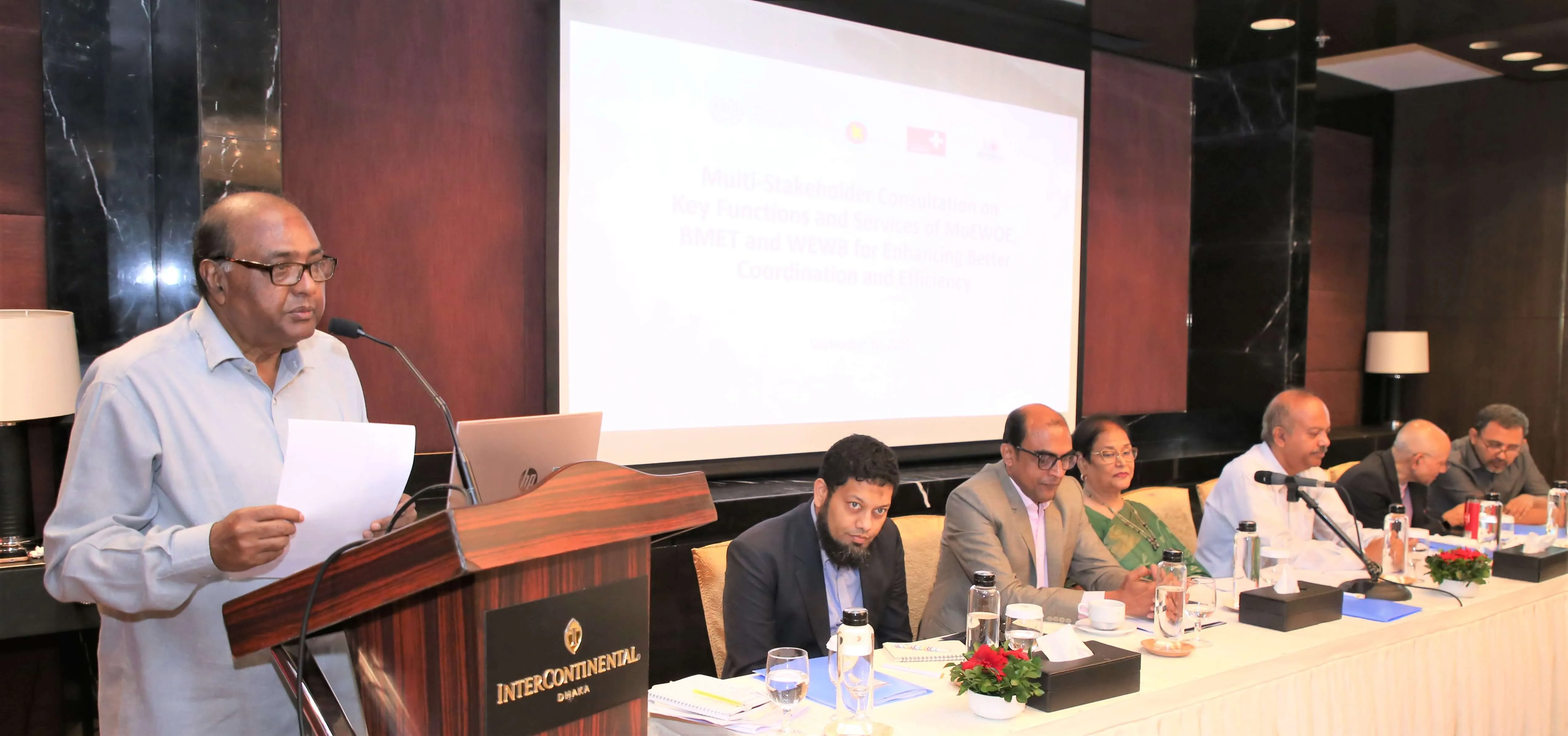
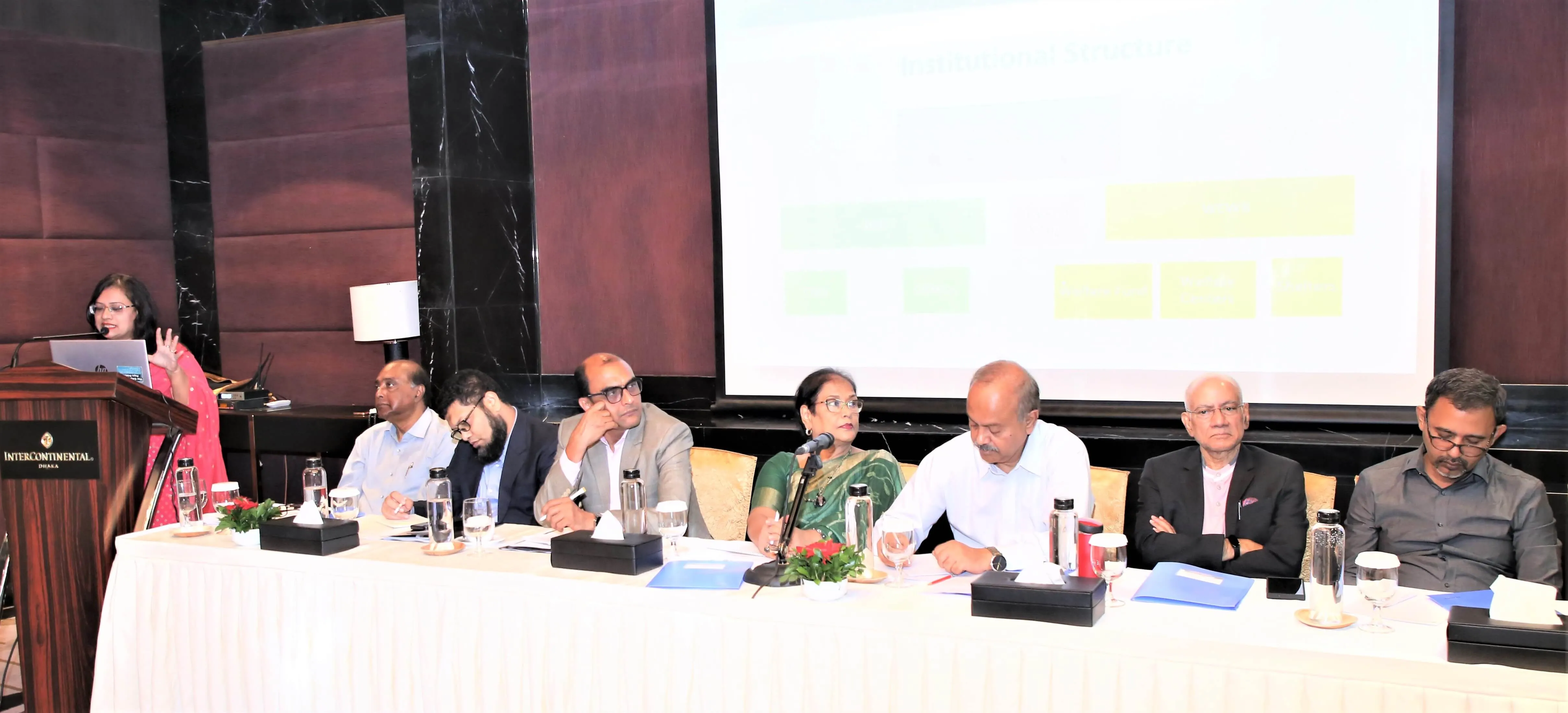
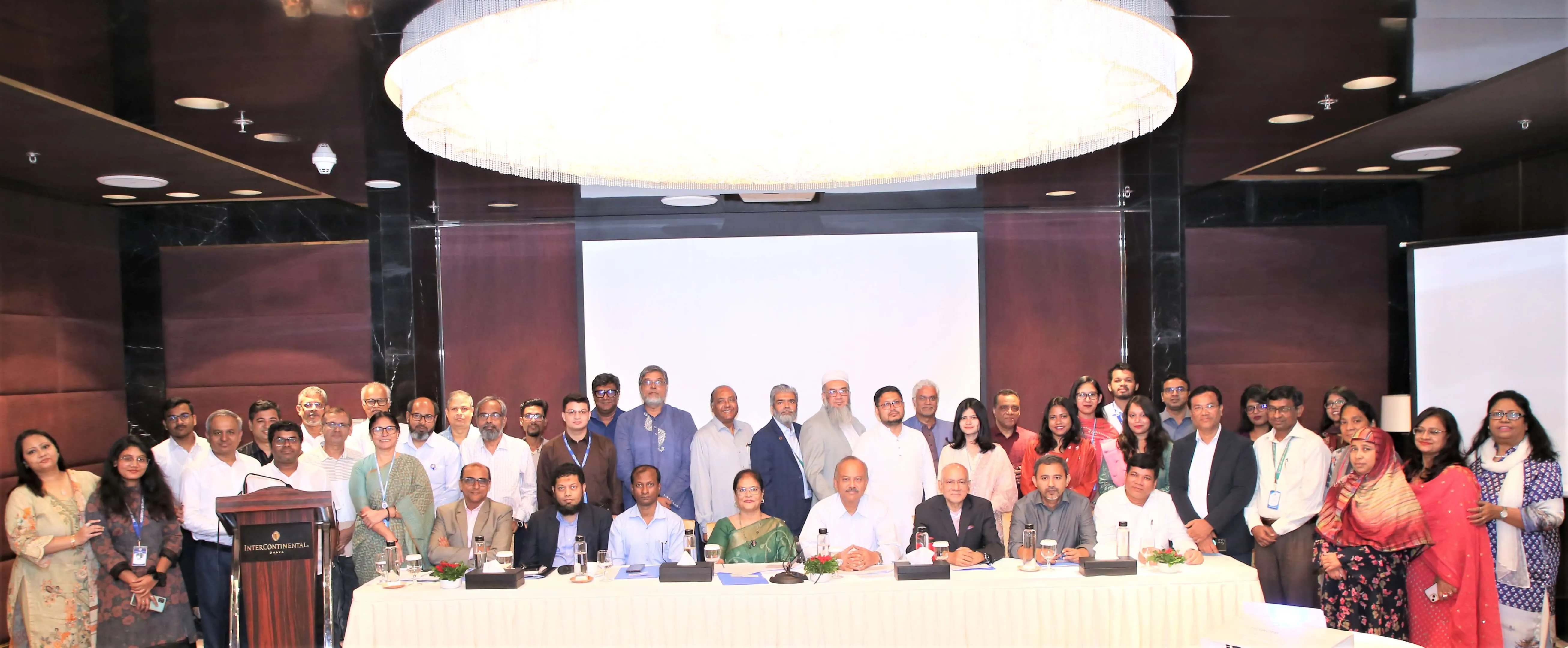
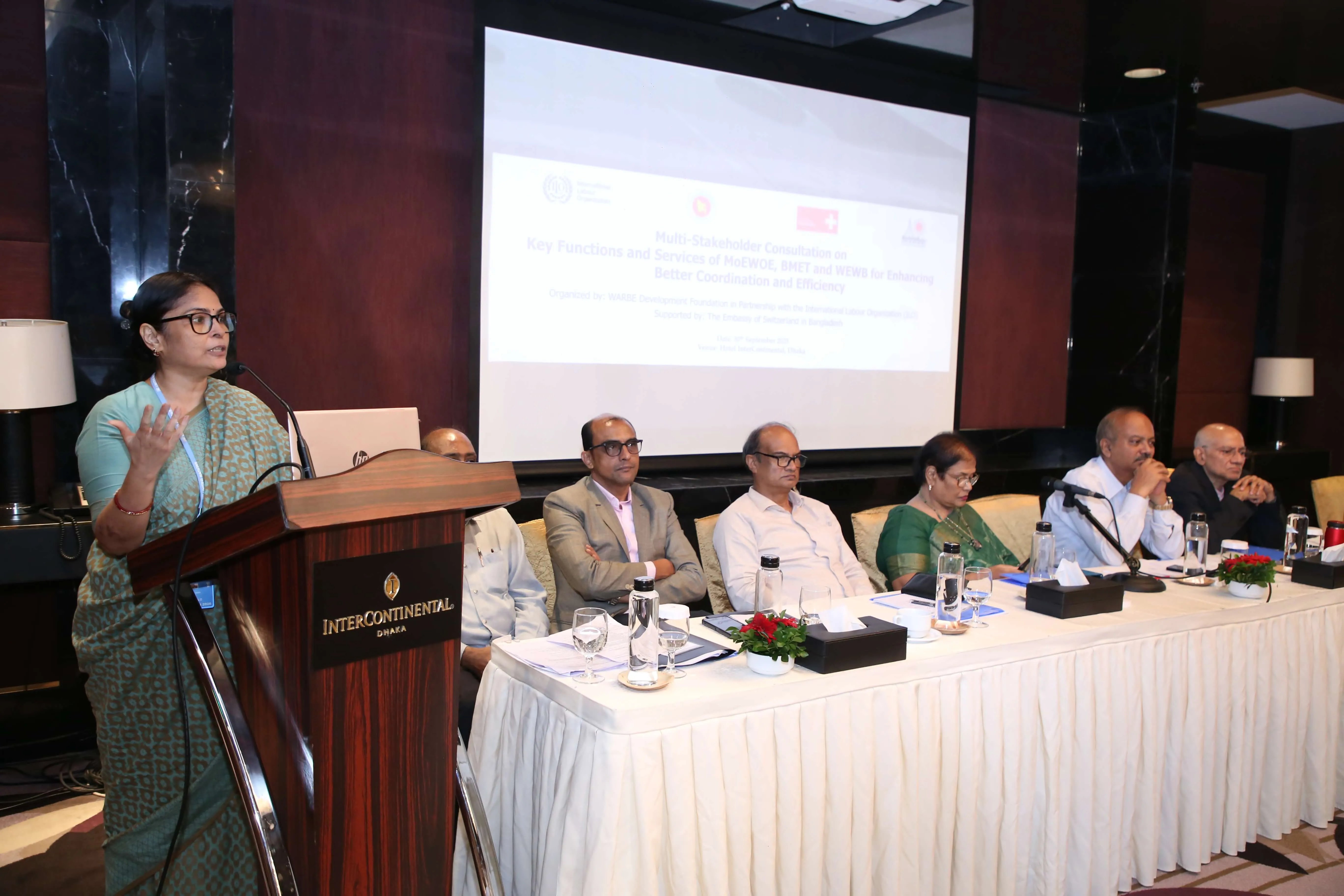
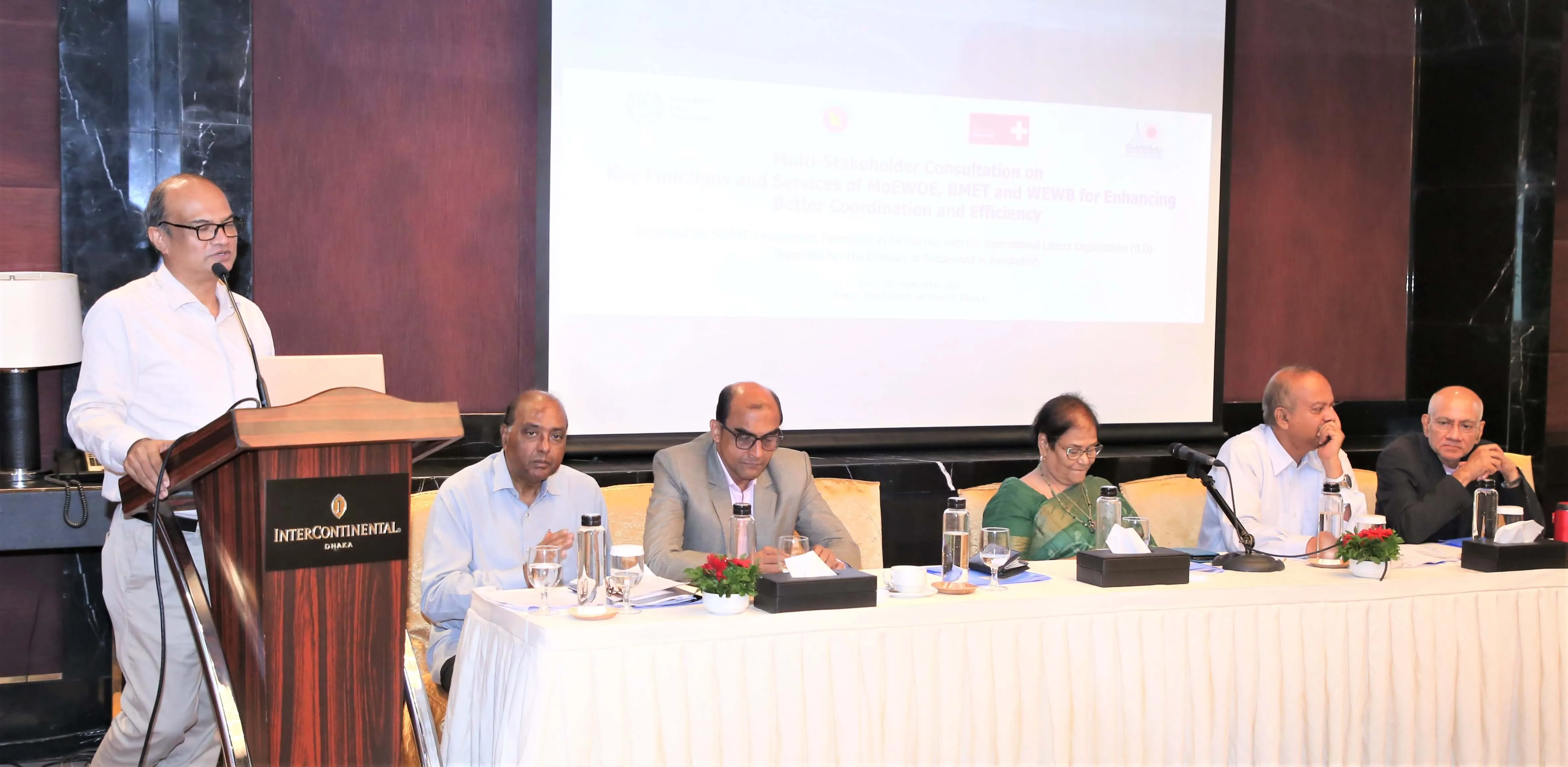
The Multi-Stakeholder Consultation on Key Functions and Services of the Ministry of Expatriates’ Welfare and Overseas Employment (MoEWOE), Bureau of Manpower, Employment and Training (BMET), and Wage Earners’ Welfare Board (WEWB) was organized by the WARBE Development Foundation, in collaboration with the International Labour Organization (ILO) and supported by the Embassy of Switzerland.
The consultation brought together senior government officials, trade unions, civil society organizations, private sector representatives, returnee migrants, and development partners to review existing coordination mechanisms within Bangladesh’s migration governance system. Participants underscored the pressing need for stronger alignment among MoEWOE, BMET, and WEWB to enhance institutional efficiency and service delivery for migrant workers.
Key challenges identified included overlapping institutional functions, weak data management on returnee migrants, inconsistent grievance handling, and limited transparency in fund utilization. Stakeholders emphasized that addressing these gaps is essential for improving accountability and ensuring that migration services are effective, inclusive, and gender-sensitive.
The consultation generated a number of actionable recommendations: establishing a centralized grievance management and data system, clearly defining institutional roles, improving Pre-Departure Orientation (PDO) programs, and aligning skills training with global market demands. Participants also called for diversifying labour markets beyond the seven major destination countries, enhancing embassy capacities abroad, and ensuring the inclusion of civil society and migrant voices in decision-making processes.
The event concluded with a shared commitment to advancing a coordinated, transparent, and accountable migration governance system that safeguards migrant workers’ rights, supports reintegration, and contributes to Bangladesh’s sustainable development.