Consultation Meeting
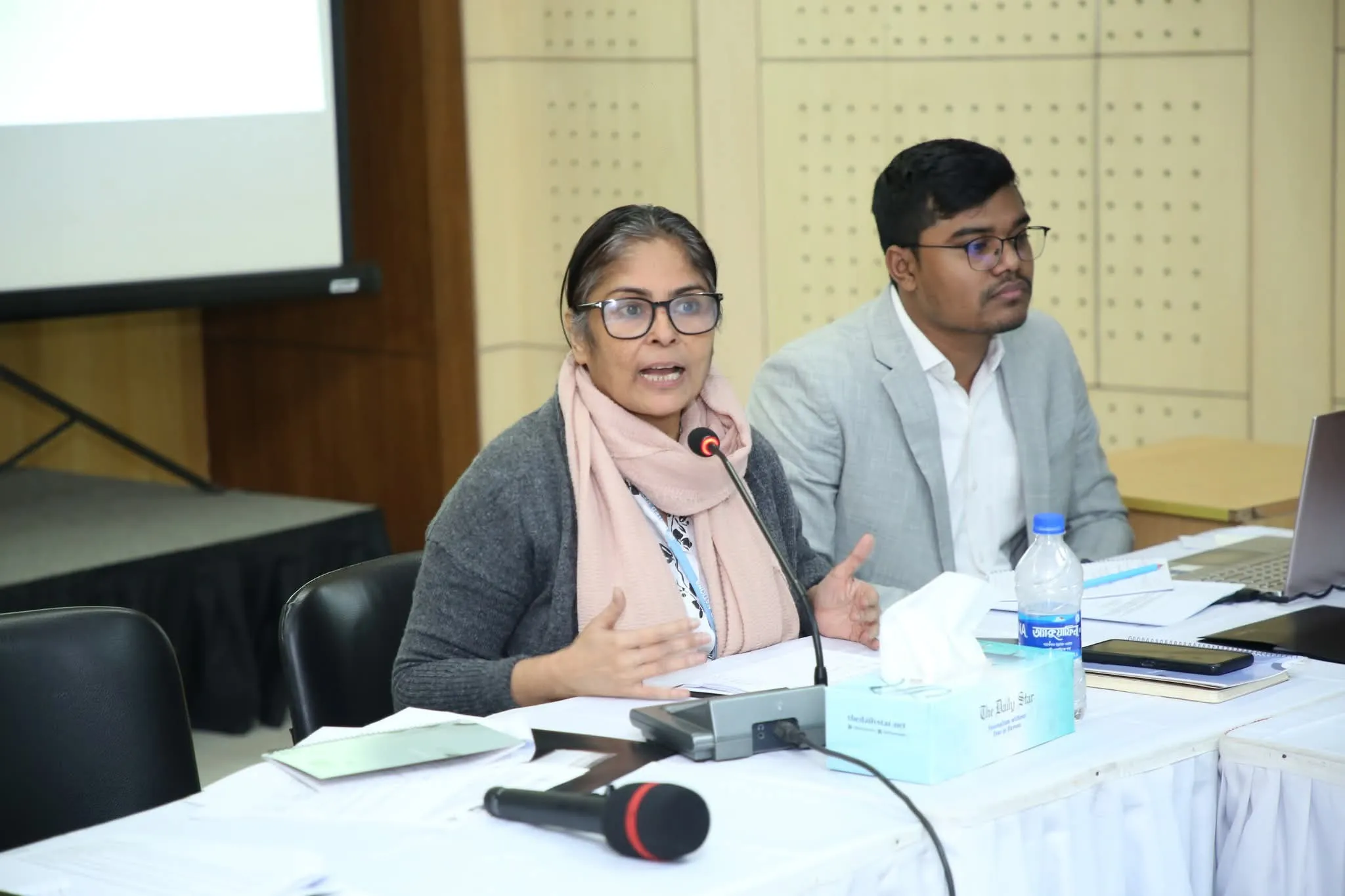
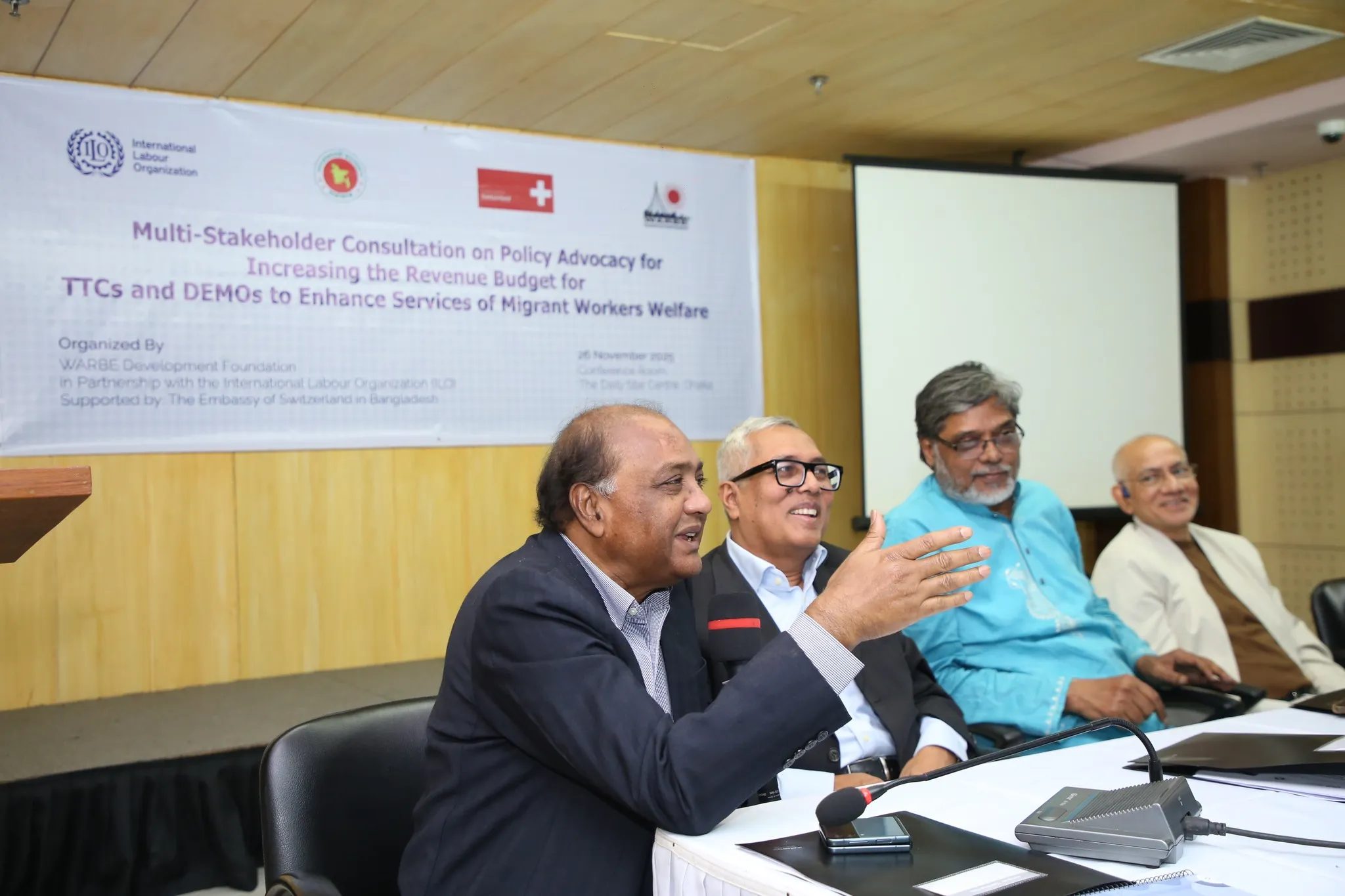
Stakeholders Discussion
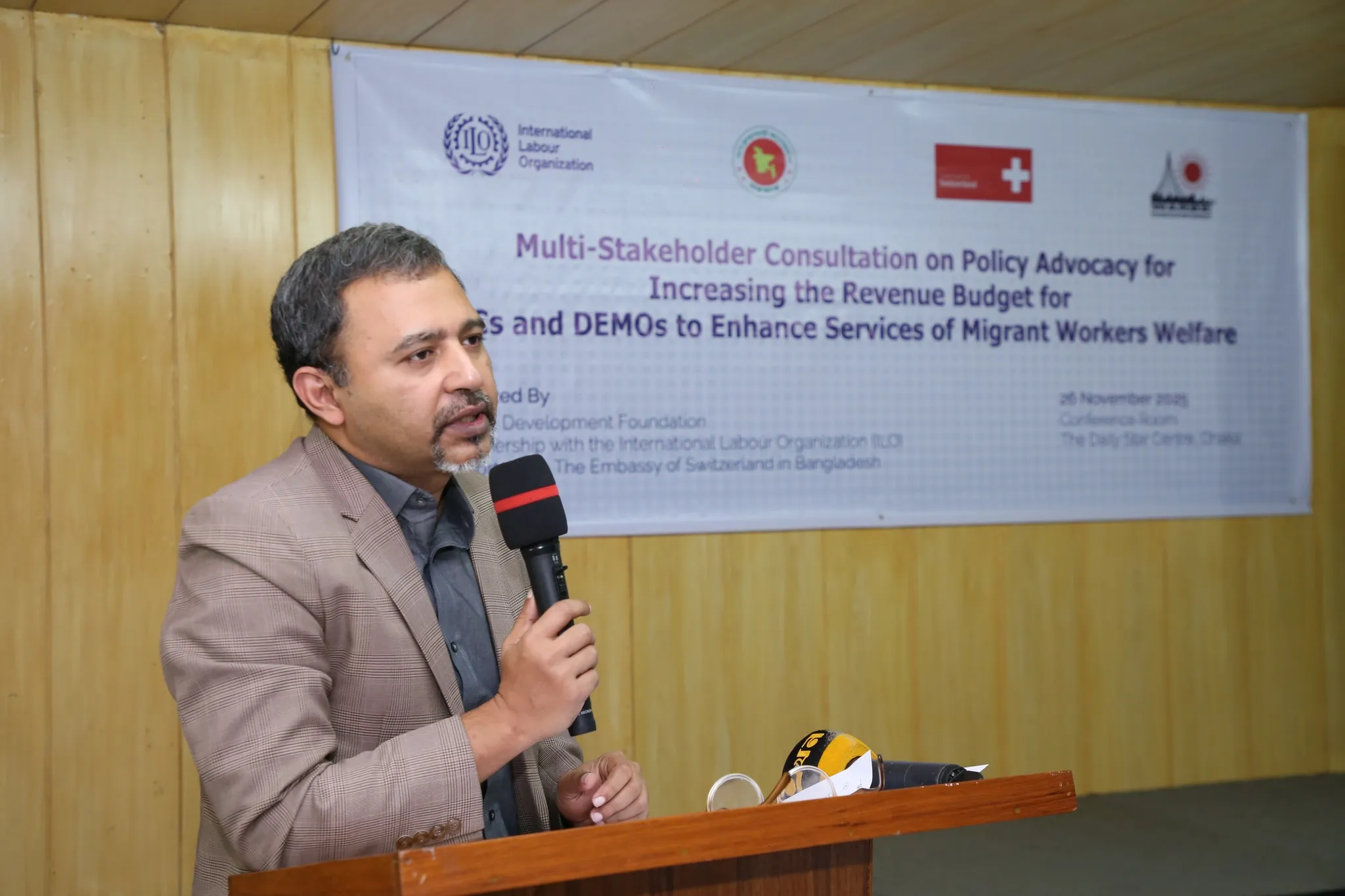
Keynote Presentation
Participants
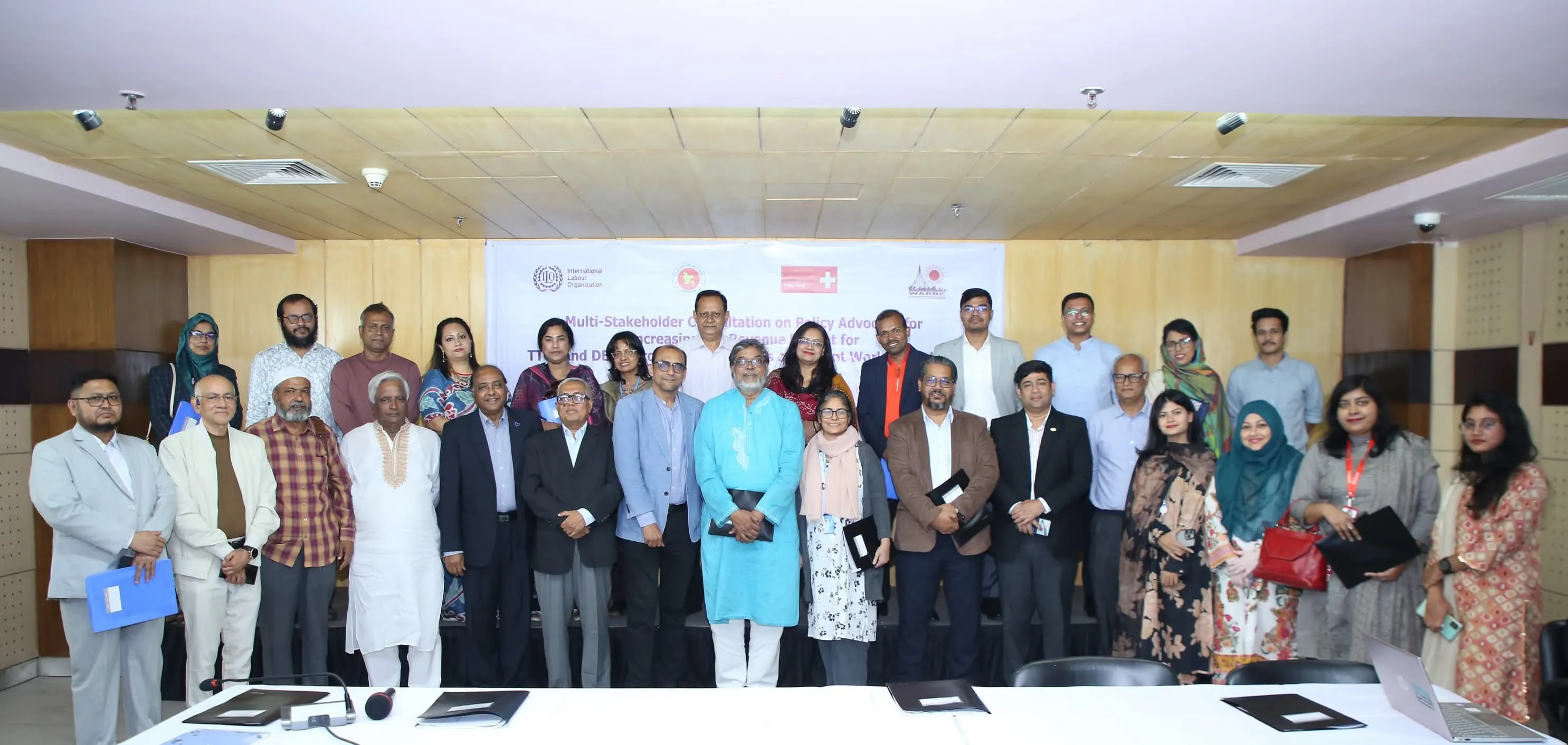
Group Photo
Click image to enlarge
← Back to Activities
26 November 2025

Multi-Stakeholder Consultation on Policy Advocacy for Increasing the Revenue Budget for TTCs and DEMOs to Enhance Services of Migrant Workers Welfare

On November 26, 2025, the WARBE Development Foundation, in partnership with the ILO and the Embassy of Switzerland, convened a multi-stakeholder consultation in Dhaka to address critical gaps in Bangladesh's labor migration ecosystem. The primary objective was to advocate for increased revenue budgets for Technical Training Centres (TTCs) and District Employment and Manpower Offices (DEMOs), institutions described as the backbone of the country’s overseas employment system. Participants, including government officials, development partners, and civil society representatives, aimed to identify operational constraints and generate evidence-based recommendations to enhance services such as skill development, pre-departure orientation, and grievance redress for migrant workers.

The discussions highlighted a significant mismatch between current local training programs and international market demands, with experts noting that revenue allocations have remained stagnant despite the high volume of migration. Keynote speakers pointed out that while 10-11 lakh migrants leave annually, only roughly 40 TTCs are equipped to serve them, often suffering from outdated curricula, a lack of language training, and insufficient focus on high-demand trades like construction. Stakeholders also emphasized that the lack of internationally recognized certification and weak coordination between TTCs and DEMOs has resulted in unskilled workers facing lower wages and limited protection abroad.

The consultation concluded with a consensus on the need for strategic policy reforms, specifically calling for performance-based budgeting and multi-year financial planning to modernize training infrastructure. Recommendations focused on updating curricula to include 4th Industrial Revolution (4IR) skills and language proficiency, as well as establishing a dedicated Migration Institute to conduct continuous research on global labor markets. Furthermore, participants urged the government to strengthen the capacity of DEMOs to provide better counseling and reintegration support for returnee migrants, ensuring a more comprehensive approach to migration governance.